
How to choose the type of wood for your custom furniture project in the Basque Country?
How to choose the type of wood for your custom-made furniture in the Basque Country?
The choice of wood species is never insignificant. Before color, before price, there is the intended use. A dining table requires a hard, stable wood that can withstand the wear and tear of daily use. A chair demands a wood species that can be bent or machined without splitting. A decorative object can play with grain, pattern, and the way the wood takes on a color. Use, aesthetics, craftsmanship, and price—these four parameters guide every material choice in the workshop.
The origin of the wood: local roots
The majority of the planks that arrive at the workshop come from a timber merchant, guaranteeing volumes, controlled drying, and regular availability. This is the backbone of our supply.
But another part of the planks has a more direct story. Trees salvaged locally, sawn on site with a log saw, in the forest or in private gardens. An oak felled during a storm. A diseased maple that had to be cut down. An ash tree too close to a house in Cambo-les-Bains. A cedar tree sacrificed for a home insurance policy. A birch tree removed from a residential garden. A wild cherry tree that fell across a road in Biarritz.
These trees aren't simply thrown away; they're sawn, cut into planks, and then left to dry. The commonly accepted rule is one centimeter of thickness per year. But what matters in the workshop is the wood's actual moisture content, measured with a moisture meter. Below 12% moisture, the wood is stable and ready to be worked. Above that, it will shift, warp, and change shape after processing. From the log dump to the workshop, three to five years of patience are required.
This local sourcing also comes through other channels: regional sawmills, local dealers, and sometimes individuals looking to make use of a felled tree rather than seeing it end up as firewood. LeBonCoin has even become a regular hunting ground.
There is only one limitation to this approach: exotic woods are not used in the workshop. This is not due to dogmatism, but because the region offers enough local wood for various uses. Elm ( Ulmus ) is one of the species absent, not because of a lack of interest—it is a remarkable wood with complex grain and exceptional durability—but because Dutch elm disease, a fungal disease spread by a beetle, decimated European elm forests during the 20th century. Working with elm today has become rare.

Guide to wood species for furniture making
Oak ( Quercus robur ): the standard for everyday furniture
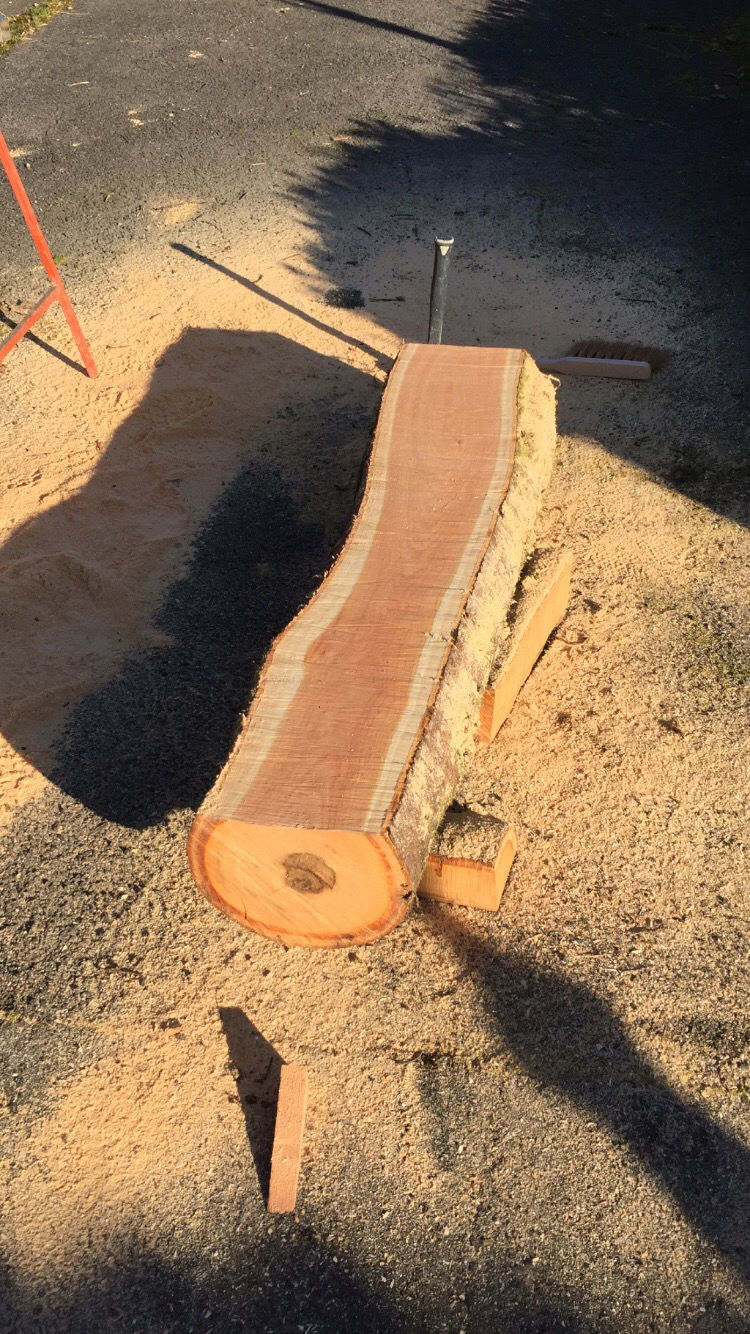
It's the dominant wood species in the Basque Country. You find it everywhere: in the forest, at timber merchants' houses, in gardens. It's often the first request from clients, and for good reason: its hardness makes it an ideal material for tables and everyday furniture. It resists impacts, humidity, and the test of time. For example, it was used in the DUNES project , the tables for the Biarritz city council. Some specimens hold surprises. Here's a sawn oak from Anglet.


The plane tree ( Platanus hispanica ): identity and structure
It is the most affordable type of solid (hard) wood. Found in almost every town, it has been a fixture of the French landscape since the 19th century, when its planting along major roads was encouraged to provide shade for travelers and troops, before becoming the quintessential street tree. In the Basque Country, it also resonates deeply with the local culture: the pala, the traditional Basque pelota racket, is historically made of plane tree. A solid, dense, and resistant wood. What makes it particularly interesting for cabinetmaking is its quarter-sawn grain, this characteristic scaly pattern visible when the wood is cut perpendicular to the medullary rays. It is also a wood that allows for local production at a price significantly lower than oak.


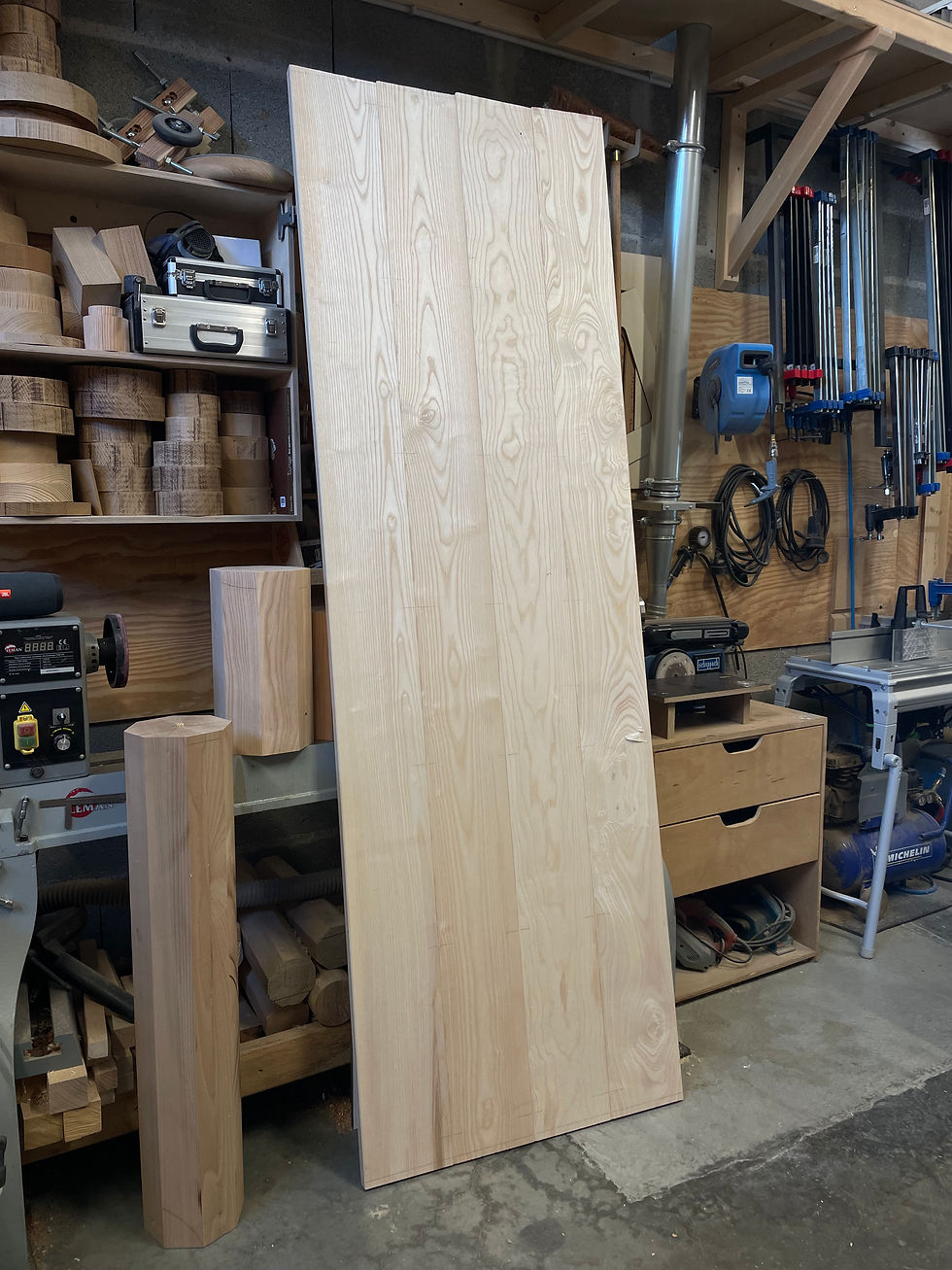
The ash tree ( Fraxinus excelsior ): the depth of the flames
It is distinguished by its flames, those undulations in the wood grain that appear in raking light and give the surface a particular depth. It takes stain remarkably well, making it an interesting choice when a custom project requires a specific color without sacrificing the wood's character. It machines cleanly, bends easily, and works well with joinery. Some old ash trees hold an additional surprise: olive ash, whose contrasting veins, alternating between creamy white and deep brown, visually resemble olive trees.


The walnut tree ( Juglans regia ): exceptional and prestigious
It is the most sought-after and expensive wood. Its chocolate brown color, deep grain, and surface that reacts to light all contribute to making it an exceptional wood. Its high price naturally limits its use to small objects, inlays, and details that make a difference on a larger piece. It is a wood that is worth the effort, and it lives up to that expectation. Some racks for Ada Rack surfboards , for example, were made of walnut. Or consider the inlays of the Biarritz city coat of arms in the DUNES tables .

Maple ( Acer ): graphic clarity
It is chosen for its pattern and the quality of its grain. Some maples display remarkable patterns: wavy, shimmering, and speckled, making them sought-after species for projects where aesthetics are paramount. Its light, almost white hue contrasts with darker woods and opens up possibilities for playing with different species within the same piece.
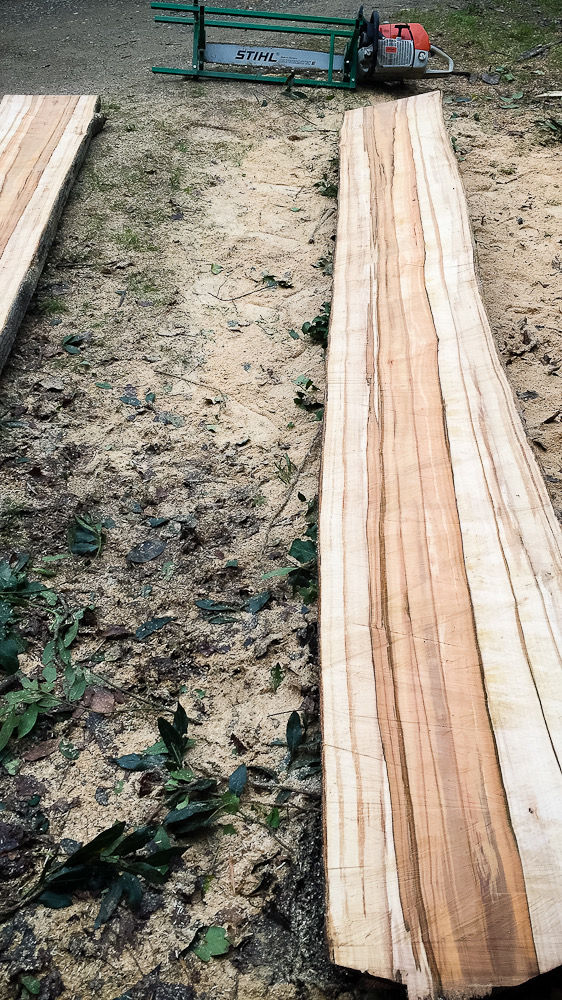

The wild cherry tree ( Prunus avium ): living warmth
It brings a warmth that few other woods possess. Its pinkish-orange hue evolves towards brown over time, under the influence of light. It is a living wood, changing in its environment. Fine, homogeneous, and pleasant to work with, it is suitable for both objects and delicate furniture.

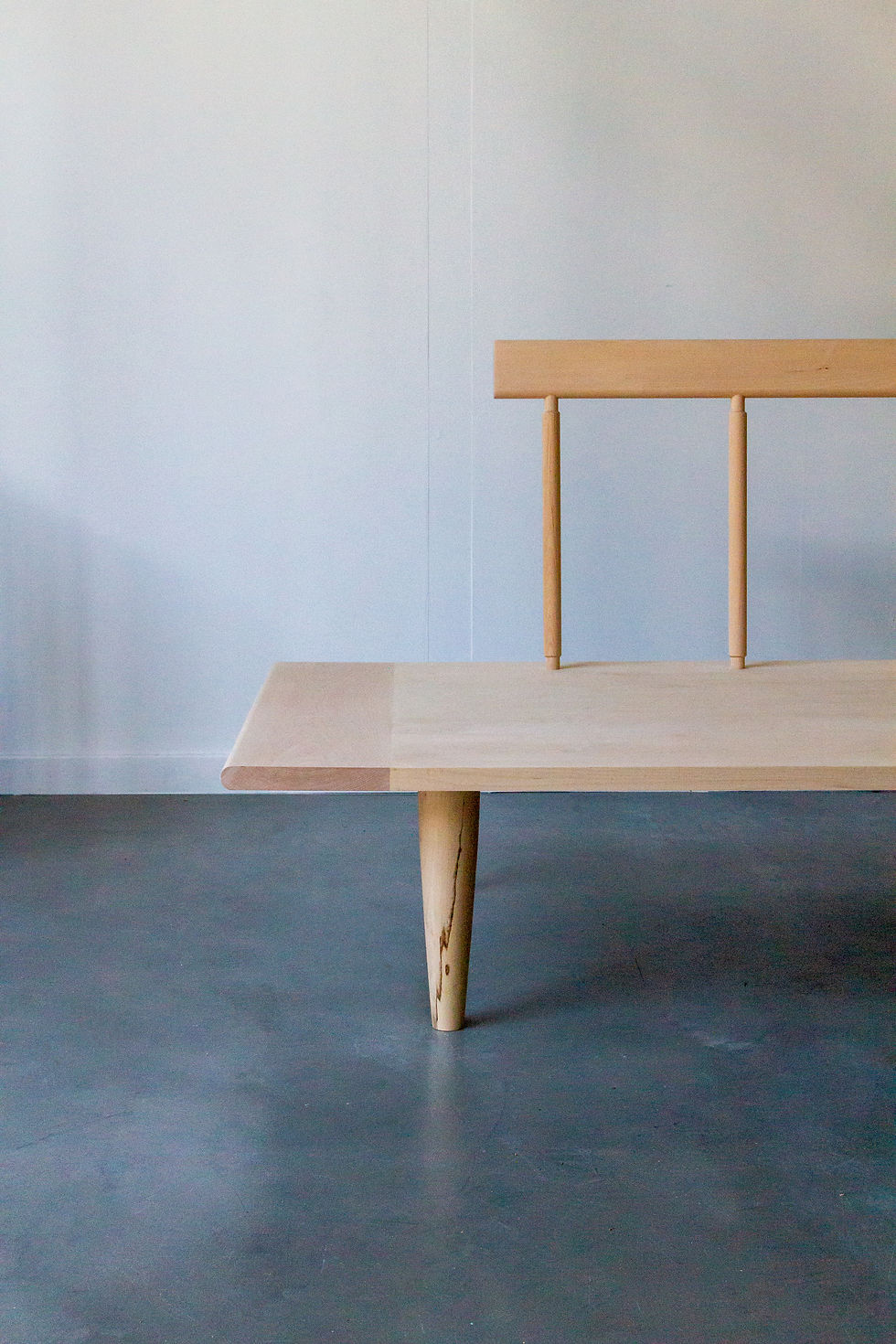
Beech ( Fagus sylvatica ): the stability of large formats
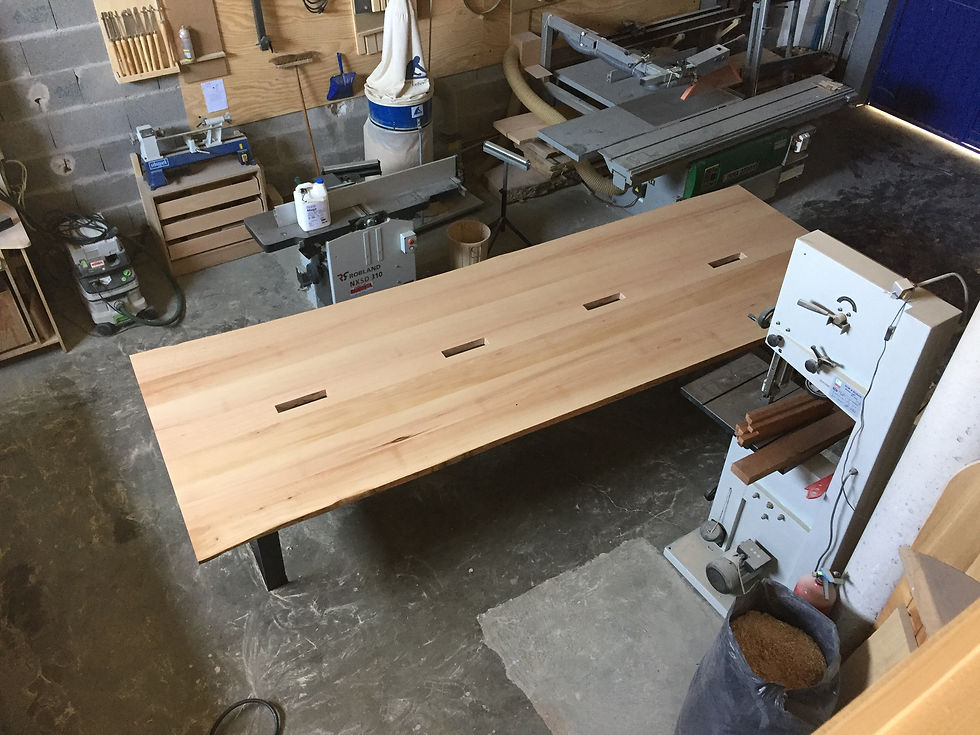
This is the preferred wood for large tabletops. Homogeneous and stable once dried, it offers wide and even surfaces. Its light color and fine grain make it a discreet wood, allowing the form to speak for itself rather than the material.

The chestnut tree ( Castanea sativa ): the historical alternative
Often confused with oak, chestnut is less dense, easier to work with, and grows abundantly in the forests of the Basque Country and the Landes region. It possesses a unique property: its tannin content naturally repels spiders, which never build their webs on it. This is why castle libraries were historically made of chestnut. A serious alternative to oak for certain projects, and generally at a more affordable price.

Birch ( Betula ): flexibility and lightness
It is a light and homogeneous wood, easy to work with, and well-suited to bending, curved pieces, and woodturning. Its slightly pearly white hue makes it a delicate wood, often chosen for pieces where visual lightness is paramount. Workshop technical note: it offers the best stability for large panels in plywood form, without the risk of warping.
Black locust and cedar: outdoor wood species
These are the two main types of wood used for outdoor furniture. Black locust (Robinia pseudoacacia) is one of the hardest and most moisture-resistant woods found in Europe. Cedar ( Cedrus ), which is lighter, is naturally resistant to insects and fungi thanks to the essential oils in its wood. Both are perfectly suited for patio furniture. We also sometimes work with red cedar ( Thuja plicata ), sourced from online marketplaces. This is an exceptionally lightweight and durable North American wood, which, due to its proximity to the surf and foil scene, is sometimes available locally.

Paulownia ( Paulownia tomentosa ): technical lightness
This is the lightest wood the workshop works with. It is used specifically for making surfboards. Imported from Spain or Portugal, it is one of the few non-local woods used in the craft, justified by mechanical properties not found in local woods: an extremely low density for remarkable water resistance.

The pine tree ( Pinus ): the rational structure
It is used for structural purposes in projects where cost-effectiveness is paramount. A reliable and readily available material, it is well-suited to the unseen parts of furniture. Its wide availability in the Landes region makes it a natural choice for the area.

What the wood decides
Choosing a wood species means working with what a region produces, what time allows, and what each tree has decided to become. No two planks are identical, and that is the condition of solid wood; it is what makes each piece of bespoke furniture irreducibly unique.
Quentin Delion, a cabinetmaker and designer in Bidart, in the Basque Country, selects and works with wood species according to each project, from sourcing in the local forest to finishing in his workshop. Do you have a wooden furniture project? Let's talk about it.


Comments